






In today's world, local wars and violent conflicts occur frequently, making individual protection increasingly important. Single-function bulletproof or stab-proof products are no longer sufficient to meet safety requirements. Therefore, dual-protective suits that combine bulletproof and stab-proof functions have become a research hotspot.
Bulletproof and puncture-resistant materials have undergone an evolution from metals to ceramics and then to high-performance fiber-reinforced composite materials, achieving a transformation from hard to lightweight and flexible. Among them, high-performance fiber-reinforced composite materials, with their advantages such as low density, high specific energy absorption, high specific strength and specific modulus, have become the key to achieving lightweight and integration of bulletproof and puncture-resistant suits.
Among various bulletproof vests, hard bulletproof vests have both bulletproof and stab-proof functions due to their built-in ceramic plates, while soft bulletproof vests are mainly used to protect against pistol and rifle bullets as well as fragments of explosives. Their protective mechanism lies in the dispersion or consumption of energy through the deformation and breakage of fibers. Meanwhile, anti-puncture suits absorb puncture energy through friction, deformation and heat generation, etc. The materials are required to have a high shear modulus and high energy absorption capacity, and be able to closely organize to resist the tip of the knife.
However, researching soft protective clothing that is both bulletproof and punctureproof, as well as comfortable and lightweight, remains a challenge in the field of personal protection. Advanced fiber composite materials commonly available on the market, such as aramid and ultra-high molecular weight polyethylene fibers, offer the possibility to solve this problem. Especially para-aramid, with its ultra-high strength, high modulus and high-temperature resistance, has been widely used in the field of bulletproof and puncture-proof.
Twaron of TEIJIN Co., Ltd. in Japan
Heracron of the South Korean KELON Group
Tapararan from Yantai Taihe New Materials Co., Ltd. in China
And Staramid from Zhonglan Chenguang Chemical Research and Design Institute
F-2 and others are all well-known aramid products.
1. Aramid unwoven fabric
Weft fabric, a composite material that combines fibers with a resin substrate, involves the unidirectional arrangement of fibers and biorthogonal lamination in its manufacturing process. This material is widely used in the bulletproof field due to its unique structural properties, such as the high mechanical property retention rate of fibers, and the high rate of stress wave and energy propagation. However, the bulletproof and puncture-resistant performance of aramid unwoven fabric is influenced by multiple factors, including the type and modulus of the resin, the surface density of the composite material, and the usage environment, etc. The research by Wu Zhongwei et al. has revealed the significant influence of these factors on bulletproof and puncture-resistant performance, providing guidance for optimizing material properties. Meanwhile, Fang Xinling and others' research focused on the selection of adhesives and the forming process of composite materials, laying a foundation for further improving the performance of aramid unwoven fabric.
Figure 1 shows the structure of the unweft fabric. In the field of bulletproof and puncture-resistant composite materials, aramid two-dimensional woven fabric is a common fabric form. Gao Xiaoqing et al. compared the composite materials of different aramid woven fabrics and modified epoxy resins and found that when modified epoxy resins were combined with the selected aramid fabrics, their protective performance was the best. Li Yabin et al. conducted a drop hammer impact test to analyze the influence of different coating processes on the puncture resistance of aramid plain weave fabric and thermoplastic polyurethane composite materials. They found that the composite fabric using the transfer coating process had higher bundle fiber pull-off force and tear strength, and had a better puncture resistance effect. In addition, the combination of high-modulus polycarbonate-based polyurethane and aramid fabric can also significantly enhance the puncture resistance.
On the other hand, aramid three-dimensional fabrics have been improved on the basis of traditional two-dimensional fabrics by introducing binding yarns, which enables the fabric to have good interweaving properties both within and between layers. This structure can effectively regulate when subjected to force, suppress local deformation caused by delamination, and thereby enhance energy absorption. The research conducted by Ye Mingqi and others also confirmed this point.
An innovative three-dimensional orthogonal fabric was designed, and its puncture resistance performance was deeply explored. By comparing with two-dimensional fabrics and weft fabrics, it was found that the three-dimensional fabric demonstrated outstanding puncture resistance in the drop weight impact test. Even if the fabric quality was the same, both the two-dimensional fabric and the weft fabric were directly penetrated, while the three-dimensional fabric remained intact. This result fully demonstrates the advantages of three-dimensional fabrics in the field of puncture resistance.
Furthermore, the research by YANG Y X et al. further revealed the superiority of three-dimensional fabrics in terms of impact resistance. They compared the impact resistance and mechanism of laminated two-dimensional plain weave fabric and three-dimensional interlayer angular interlocking fabric, and found that the energy absorption effect of three-dimensional fabric was significantly better than that of two-dimensional fabric, with its surface density energy absorption ratio (SEA) increasing by 77%. This discovery provides strong theoretical support for the application of three-dimensional fabrics in the field of protection.
Meanwhile, UHMWPE bulletproof and punctuation-resistant materials have also attracted much attention. UHMWPE fiber, as a high-performance fiber, features low density, high axial specific strength and modulus, superior energy absorption and wear resistance, making it an ideal choice for protective materials. However, the low melting point and poor wettability of UHMWPE fibers to some extent limit their application. To overcome these challenges, researchers are actively exploring matrix resins suitable for UHMWPE weft fabric. For instance, Li Yan et al. 's research discovered the influence law of waterborne polyurethane content on the bulletproof performance of UHMWPE fiber unwoven fabric composites, providing a new idea for optimizing the performance of composites.
Gu Bingfang and others' research on the bulletproof mechanism of UHMWPE non-woven fabric composite materials revealed the relationship between the bulletproof performance of the target plate and the number of layers of UHMWPE non-woven fabric. They found that as the number of layers increased, both the ballistic ultimate speed (v50) of the target plate and the ballistic energy absorption value showed a positive correlation, providing an important theoretical basis for further improving the bulletproof performance of UHMWPE non-woven fabric composites.
Analysis shows that as the number of layers of unwoven fabric penetrated by the bullet increases, its impact velocity is positively correlated, and each layer penetrated is accompanied by a loss of impulse. The research by Wang Xucai et al. further revealed the changes in the protective efficacy of UHMWPE composites under multiple bullet attacks. At first, its tight fiber structure and interlayer synergy endowed the material with excellent bulletproof performance. However, after multiple penetrations, the sample structure became loose, and the fiber layer became uneven, resulting in weakened bulletproof performance and increased unevenness.
In addition, the research of Tian Luxin et al. focused on the cut and puncture resistance of plain weave UHMWPE fiber fabrics. They found that under static conditions, the anti-cut performance of the fabric in the weft direction was better than that in the warp direction. In terms of dynamic puncture resistance, the time required for the puncture force to reach the first peak is 303 milliseconds, and the total response time is 497 milliseconds. Zhang Xiaoze attempted to use UHMWPE fibers as raw materials to weave fabrics with a thickness of up to 8 millimeters on wide-width industrial shuttle looms, and developed a multi-layer warp and weft yarn one-time interweaving forming technology, laying the foundation for the mass production of double-weft interlocking three-dimensional woven fabrics. The study also found that when the warp and weft density is appropriate and the fabric structure is tight, its puncture resistance performance is particularly outstanding. Meanwhile, under the same material and warp and weft density conditions, the yarn buckling times of square weave fabrics are only half that of plain weave fabrics, thus demonstrating stronger diffusion ability and better puncture resistance.
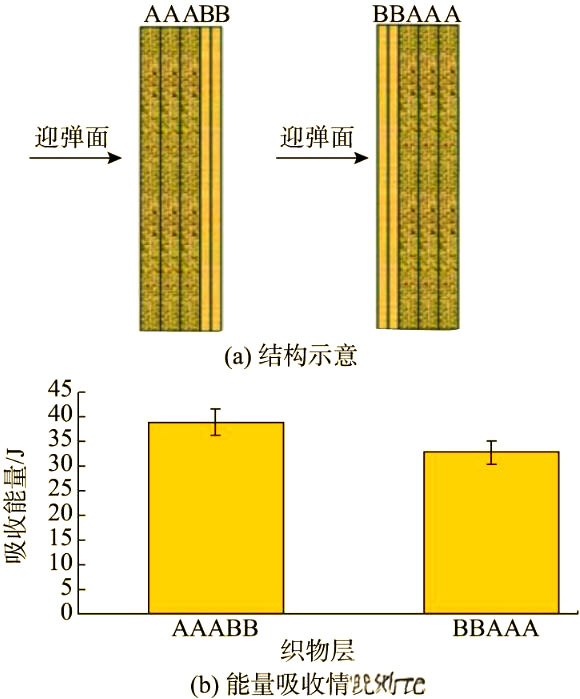
To further enhance the comprehensive bulletproof and puncture-resistant performance of fabrics, the method of combining weft fabric with woven fabric is often adopted. Yuan Zishun and others designed and trial-produced composite target plates of UHMWPE plain weave fabric and weft fabric with different layup sequences. They found that the layup sequence has a significant impact on the bulletproof performance of the composite target plate. Especially when the plain weave fabric is located on the side facing the bullet, the energy absorption effect of the composite target plate is increased by approximately 20% compared to the back bullet side, thereby demonstrating superior bulletproof performance.
The puncture resistance of three kinds of domestic UHMWPE fiber woven fabrics, weft fabrics and nonwoven fabrics was studied. Through the quasi-static puncture test, it was found that the puncture resistance of these three fabrics was in the order of woven fabric, weft fabric and nonwoven fabric. In addition, the performance of the hybrid system of woven fabric and nonwoven fabric under dynamic puncture conditions was further explored. It was found that compared with the single-component puncture-proof suit, this hybrid layup has better puncture-proof performance. Gu Zhaowen successfully woven fine-grained plain weave fabric using UHMWPE filaments without 捑 and alternately superimposed it with nonwoven fabric, thus creating a composite puncture-resistant suit that not only has excellent puncture-resistant performance but also maintains a moderate thickness and light weight. This design not only enhances the softness of the punctuality suit but also improves the comfort of wearing it.
In the field of bulletproof and stab-proof composite materials, para-aramid fibers and UHMWPE fibers have always held an important position, and the application of UHMWPE fibers is becoming increasingly widespread. In recent years, the development of these two high-performance fibers in China has been rapid. Nevertheless, compared with the international advanced level, there is still a certain gap. To further enhance the comprehensive performance of these two types of fibers and expand their international market share, relevant researchers and R&D departments of enterprises are making continuous efforts.
In addition to para-aramid and UHMWPE fibers, researchers are also actively exploring other new high-performance fibers. For instance, poly (p-phenylene) benzodiazole (PBO) fiber, a new type of fiber known as "Zylon", performs exceptionally well in terms of strength, modulus and heat resistance. However, due to its weak aging resistance and smooth surface, its large-scale application in bulletproof and stab-proof suits is still subject to certain limitations at present.
Another fiber worth noting is the poly (2, 5-dihydroxy-1, 4-benzopyridine-diimidazole)(PIPD) fiber. This ultra-high performance fiber, developed by Akzo Nobel at the end of the 20th century, has a carefully designed molecular structure to meet the requirements of high-performance materials. PIPD fibers not only have a high specific modulus and specific strength, but also exhibit the property of resisting ultraviolet aging. In the field of bulletproof and stab-proof suits, its application potential is gradually being recognized.
But unfortunately, after more than 20 years of exploration, only a few countries such as the Netherlands, the United States and China have initially ventured into the research and development of PIPD fiber preparation. At present, these countries have not yet established a complete technical system for monomers, polymerization and fiber preparation, so there is still a long way to go before they can be widely applied on a large scale.
Next, we talked about "spider silk" fibers. This fiber was jointly developed by the Army Biochemical Command Center of the Massachusetts Institute of Technology in the United States and a certain biotech company in Canada. They extracted spider genes and implanted them into goats to make the goat milk contain spider silk protein. Subsequently, by using a specific spinning process, the spider silk protein is transformed into artificial genetic spider silk, namely "spider silk" fibers. The strength of this fiber is as high as 4 to 5 times that of steel wire, indicating its potential in the future manufacturing of super-strong protective clothing. However, the current high price of "spider silk" fibers has become an obstacle to their industrial production, so reducing costs has become the key. It is gratifying that Chinese scientists have successfully synthesized "spider silk" fiber through transgenic silkworm technology. Its tensile strength reaches 1299 MPa and its toughness is 319 MJ/m ³, which is six times that of Kevlar fiber. This technology makes use of mature silkworm breeding techniques, providing new possibilities for the low-cost and large-scale production of "spider silk" fibers.
Figure 3 shows the illustration of a silkworm spinning "spider silk". Table 1 compares the characteristics of five types of bulletproof and puncture-resistant fibers. It can be seen from the table that each type of fiber has its unique features and shortcomings. Therefore, many scholars are dedicated to combining the advantages of different materials and preparing composite materials by mixing fibers, thereby enhancing their protective performance. For instance, UHMWPE fibers perform exceptionally well in terms of UV resistance and water resistance, effectively compensating for the deficiencies of aramid fibers in these aspects. As a result, the composite materials of aramid fibers and UHMWPE fibers have become a current research hotspot. On the other hand, although PBO fibers and "spider silk" fibers perform well in some aspects, their poor aging resistance and water resistance limit their large-scale application. In the future, it can be considered to combine these two types of fibers to solve the problem of poor weather resistance of composite materials, and at the same time promote the large-scale production and application of PBO fibers and "spider silk" fibers.
2. Relevant standards for bulletproof and puncture-resistant suits
With the continuous progress of bulletproof and puncture-resistant fiber composite materials, the relevant standard system is also constantly being updated and improved. Scholars such as Zhang Yangyang [41] sorted out the global standards for bulletproof vests, such as NIJ 0100 in the United States, GOST 34286-2017 in Russia, and HOSDB "Standard for Police Bulletproof Vests" in the United Kingdom, etc. Meanwhile, scholars such as Ma Wenjun [43] also conducted an in-depth analysis of typical anti-puncture suit standards at home and abroad, revealing the significance of authoritative standards such as the NIJ 0100 of the United States and the HOSDB 2007 of the United Kingdom.
It is worth noting that although there are numerous standards both at home and abroad, standards that truly combine the dual performance of bulletproof and punctuality are still rare. Therefore, scholars Wu Zhongwei et al. [44] proposed the group standard "Specification for Bulletproof and Puncture-resistant Clothing Made of Soft Aramid Unwoven Fabric" in 2021, aiming to fill this industry gap. Looking ahead, as bulletproof and stab-proof suits continue to evolve, industry or national standards that take into account the performance of both are bound to gradually come into being.
3 Conclusion
In the field of personal protection, bulletproof and puncture-resistant fiber composite materials, with their outstanding protective performance and lightweight features, have always been the core research target of scientific researchers. To further promote the performance optimization of bulletproof and puncture-resistant suits, future research will mainly focus on the following three directions: Firstly, develop high-performance new fiber materials to break through the current development bottlenecks of high-performance fibers; Secondly, explore how to effectively combine these high-performance fibers to enhance the overall performance of the material; Finally, continuously improve relevant industry standards and national standards to better guide the research and development and application of products.
2) Optimize the matching of fiber materials and the design of fabric structure.
R&d personnel need to conduct in-depth analysis of the compatibility of various fiber materials, and at the same time explore the optimal laying sequence and proportion when different fabric structures are combined, aiming to achieve more efficient collaborative protection.
3) Improve the testing standards for bulletproof and puncture-resistant performance.
By revising the existing standards, the accuracy of the test results is ensured, and a more comprehensive national standard for bulletproof and puncture-resistant performance is formulated to promote the continuous improvement of the quality of dual-proof suits with high standards.