
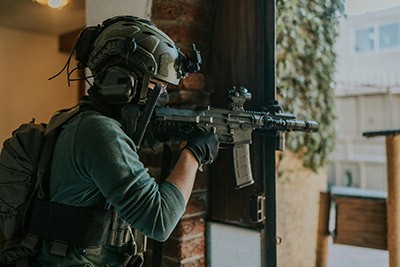






As an important component of modern military and law enforcement equipment, the bulletproof performance of helmets is directly related to the life safety of the users. This article will provide a detailed introduction to the bulletproof principle of helmets, material selection, design features, and considerations in practical applications. By analyzing the protective capabilities, comfort and flexibility of different types of helmets, it helps readers fully understand the importance of helmets in modern battlefields and law enforcement environments. In addition, this article will also explore the synergistic effect of helmets with other protective equipment, as well as the future development trends of helmet technology.
01 Bulletproof Principles and Material Selection of Helmets
The bulletproof performance of a helmet mainly depends on its materials and structural design. Kevlar is a material widely used in bulletproof helmets and is highly favored for its high strength and light weight. The "Encyclopedia of Modern Weapons" points out that the protective ability of Kevlar helmets is 24% to 40% higher than that of traditional steel helmets, and they are also lighter in weight. In addition, composite materials such as polycarbonate and ceramics are also used to enhance the protective capabilities of helmets. These materials can effectively absorb and disperse the impact force of bullets or explosion debris, reducing direct injury to the head.
The key factors in material selection
When choosing helmet materials, comprehensive considerations should be given to protective capacity, weight and comfort. Although Kevlar is lightweight, it may be slightly inadequate when facing high-speed bullets. Therefore, it is sometimes combined with ceramic or metal to enhance the overall level of protection. However, overly heavy helmets will increase the burden on the neck and affect the user's flexibility. Therefore, a balance needs to be struck between protection and weight when designing.
02 Design Features and Comfort of the helmet
The design of a helmet not only concerns its protective capacity but also directly affects the user's comfort and flexibility. In "Special Police Operations", it is mentioned that modern helmets usually adopt apron-style designs to increase the range of protection. However, some special forces, in order to adapt to specific mission environments, will use more compact designs to reduce the impact of aprons on tactical movements.
The importance of lining and fixing systems
The inner lining design of a helmet is crucial for both comfort and protective effectiveness. The PASGT helmet of the US military adopted the inner lining system design of the M1 and M1956 helmets and made improvements to make it more suitable for modern combat requirements. In addition, the design of the fixed strap and the jaw strap also needs to take into account the direction of the impact force to prevent the helmet from shifting or causing harm to the user when subjected to impact.
03 Considerations for Helmets in Practical Applications
In practical applications, the protective capability of a helmet is not the only factor to be considered. Weight, flexibility and practical significance are equally important. In "Anti-Terrorism Support", it is mentioned that overly heavy helmets will increase the burden on the neck and affect the wearer's flexibility. Moreover, overly thick designs may cause head and neck injuries due to the impact force when facing high-speed bullets, even if they can avoid being punctured.
The coordination between helmets and other protective equipment
Helmets are usually used in conjunction with equipment such as bulletproof vests and face shields to provide comprehensive protection. For instance, bulletproof masks can prevent explosives from harming the face, while bulletproof vests can protect other parts of the body. This synergy is particularly important in the tasks of special police and special forces, and can significantly reduce the probability of casualties.